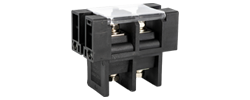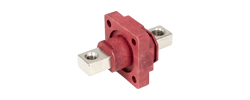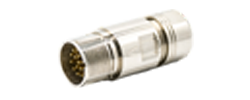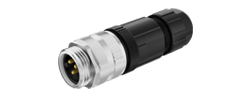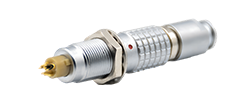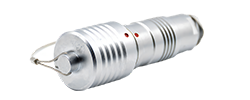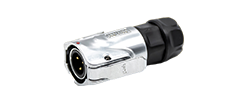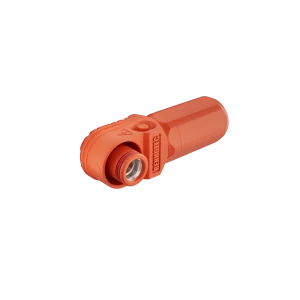
60A - 120A
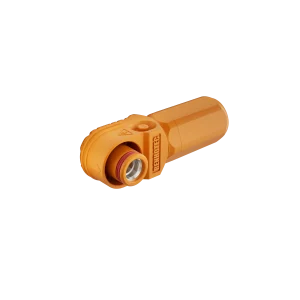
125A - 200A
250A - 350A
400A - 480A
ON THIS PAGE
Product guides · Environmental protection
Both are dust-tight. Their immersion conditions differ. Neither number alone tells you whether a connection can handle a cleaning jet.
IP67 covers temporary immersion under defined test conditions. IP68 covers continuous immersion under specified conditions that must be more severe than the IPX7 test. For IP68, read the product’s depth, duration and assembly requirements. There is no single depth-and-time combination shared by every IP68 product.
A rating such as “IP68” is useful when it is attached to the right object: a complete device, a housing with its specified panel, or a connector in its stated mating condition. A change to that assembly can change what the rating establishes.
The quick comparison
| Protection | IP67 | IP68 |
|---|---|---|
| Dust | Dust-tight: first digit 6 | Dust-tight: first digit 6 |
| Water | Temporary immersion | Continuous immersion under specified conditions |
| Depth and time | Commonly summarized as 1 m for 30 minutes; the water-level reference depends on enclosure size | Read the product’s declared conditions; do not assume 1.5 m, 30 minutes or unlimited depth |
| Water jets | Not established by IP67 alone | Not established by IP68 alone |
| Assembly | Use the specified assembly, including any mating or sealing-cap requirements | Use the specified assembly, including any mating or sealing-cap requirements |
The IP code is defined in IEC 60529. The two digits describe separate protection characteristics; the water rating must be read with its test conditions.
Moving from IP67 to IP68 changes the water-protection classification. It does not add a higher dust-protection level. “Waterproof” on its own leaves out the test conditions that make the rating meaningful.
You will also see IPX7 and IPX8 in test descriptions. The X leaves the first characteristic unspecified, so these labels isolate the water-protection requirement; X does not mean zero protection. See Intertek’s explanation of the IP code.
For other connector terms, the illustrated connector glossary explains the vocabulary used in product specifications.
Depth and duration
For a small enclosure, the IPX7 test places its lowest point 1,000 mm below the water surface for 30 minutes. That is the basis of the familiar “1 m / 30 min” description. It is a test condition, not a promise that every installation will survive any exposure shallower than one metre.
For an enclosure less than 850 mm high: measure to its lowest point.
The IP68 label does not supply these two values for every product.
For enclosures 850 mm high or taller, the IPX7 reference changes to 150 mm of water above the top. The duration remains 30 minutes. These details matter if you are comparing a small connector with a large equipment housing.
For IPX8, a relevant product standard may define the conditions. Otherwise, the manufacturer and user agree them. They must be more severe than IPX7 and account for continuous immersion in use. A published test duration should therefore be read with the manufacturer’s stated service conditions, rather than treated as a lifetime guarantee.
Water-level references and conditions: IEC/EN 60529 clauses 14.2.7 and 14.2.8 in Neutrik’s 2012 test report, page 20.
Immersion protection addresses harmful water ingress under the test conditions. It should not be expanded into a promise that no moisture can ever enter during any use. SICK’s explanation makes this distinction for temporary immersion.
Reading real specifications
Look for the numbers beside the rating and the assembly note beside the product. These published examples show why both are needed.
PHOENIX CONTACT
ECS-B-122X109-L-UV-NV GY · 1054705
The protection specification applies to the housing combined with an unaltered ECS-P…-B front panel. A panel fitted with connections requires consideration of those connections’ protection rating.
Read the housing specificationBULGIN
Mated connector assembly
Bulgin publishes this IP68 test depth and duration, and lists IP66, IP68 and IP69K when mated. The series also offers sealing caps for maintaining its stated IP68 protection.
Read the connector specificationThese ratings apply to different assemblies: one housing-and-panel combination and one mated fiber connection. Neither set of limits can be transferred to another housing or connector with an IP68 label.
If a listing gives only “IP68,” ask for its immersion depth, duration and applicable assembly before using it for a submerged installation. A test of a closed housing does not by itself establish the protection of that housing after a different connector has been installed.
A different exposure
A cleaning hose directs a jet at the surface and joints of a device. An immersion test places the assembly underwater. Those are different exposures, so an immersion rating alone does not establish water-jet protection.
IP66 addresses powerful water jets.
IP68 addresses immersion under specified conditions.
Both entries convey useful information. Dropping the first and keeping only the higher number loses the water-jet claim.
For high-pressure, high-temperature cleaning, look for the applicable dedicated rating and its referenced standard. Do not assume IP68 includes it, or treat IP69 and IP69K as interchangeable labels without checking the specification.
See Phoenix Contact’s explanation of multiple IP ratings for the distinction between jet and immersion requirements.
IP water tests use fresh water. Salt water, oil, coolant and detergent introduce material-compatibility questions that an IP67 or IP68 label does not answer. The same applies to long-term chemical exposure: check the relevant material and environmental evidence separately.
SICK: why IP ratings do not guarantee oil or chemical resistance.
Beyond a water test
An immersion rating is only part of an outdoor specification. The connection’s position matters: water can drain away from one location and collect at another, while sunlight and temperature place separate demands on the materials.
Check UV suitability and operating temperatures for the jacket and connector materials. Where specified, distinguish fixed from moving cable limits.
Consider where water reaches the connection and whether it drains away. Hose cleaning is a separate exposure; an immersion rating alone does not establish jet protection.
If water can cover the connection, check the depth and duration against the specified immersion conditions for the actual assembly.
For example, Phoenix Contact lists IP65/IP67/IP68, UV resistance and temperature limits as separate properties of its SAC-4P-M12MS/40,0-680 FDN sensor cable. An IP68 label alone does not establish UV resistance, a temperature range or suitability for years of outdoor exposure.
The connection in use
“Mated” means the connector is joined to its intended counterpart in the specified condition. When an IP rating is qualified this way, it applies to that connection state. It does not automatically describe the exposed connector after disconnection.

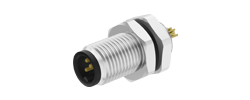
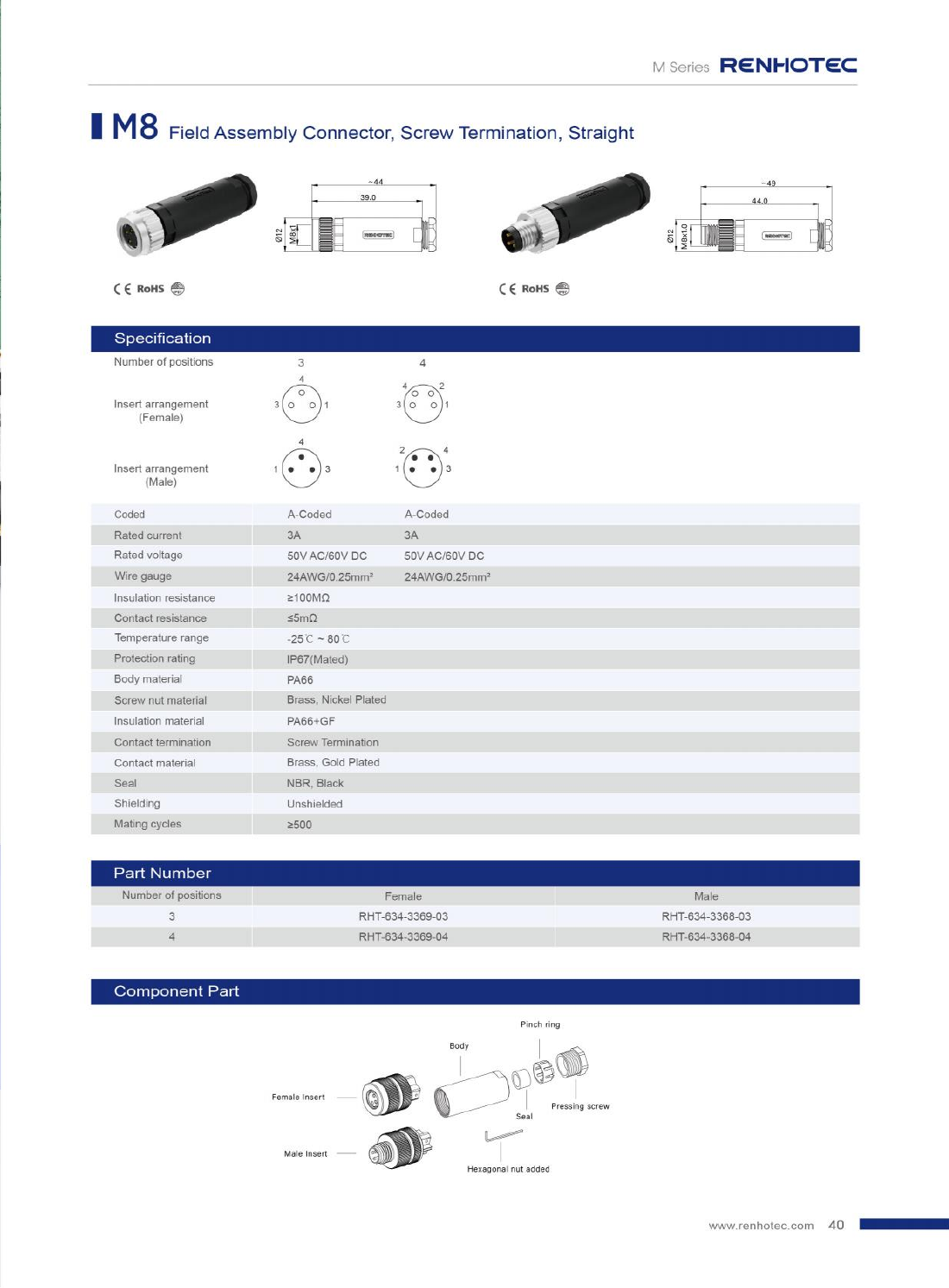
Renhotec M8 example
Four-position, A-coded male field-wireable connector
The M Series catalog ties IP67 to the mated condition. Check the specified mating counterpart and cable-entry assembly before relying on that rating.
View M Series catalog page 40A compatible mating face does not establish the sealing of every joint around it. Before relying on the declared protection, check the relevant interfaces in the product’s assembly instructions.
Bulgin’s 7000 Series metal-body assembly instructions, for example, match different gland and collet combinations to cable diameter bands. The principle is to use the specified combination for the actual cable, not to tighten an unsuitable gland harder. The parts and assembly requirements remain specific to that connector series.
Put the rating to work
Start with how water reaches the equipment, how long it remains there, and whether the connection stays assembled. The following situations lead to different checks.
IP67 may fit a requirement for temporary immersion when the depth, duration and assembled condition match the product’s applicable conditions. If the equipment also receives hose cleaning, assess that exposure separately.
Use an IP68 product with stated conditions suitable for the intended depth and exposure time. For continuous service, obtain the manufacturer’s operating conditions as well as the test figures. Sea water or another liquid needs separate compatibility evidence.
Choose by the applicable jet or washdown requirement, including cleaning temperature and chemicals. IP68 alone does not answer this task. If ports are disconnected during cleaning, their open or capped state must also be covered.
Example · Longer immersion
A connection may sit under 0.5 m of water for two hours. How does that requirement compare with the small-enclosure IPX7 test?
The IPX7 result does not establish two hours at 0.5 m. Depth and duration cannot be traded against one another from the label. Look for documented conditions covering both, then check the specified assembly and service conditions.
Example · Cleaning between shifts
Your requirement: equipment is hose-cleaned and one port is disconnected during cleaning.
What the label answers: an IP68 mated rating answers neither the jet exposure nor the disconnected state. A suitable multiple rating may address the water jet, while a specified sealing cap may address the unused port. Cleaning temperature and detergent still need their own checks.
Decision: establish protection for the state the equipment is actually in during cleaning, not only for its normal operating state.
A useful specification identifies the product and assembly, the applicable IP rating, the water exposure, and any separate environmental requirements. “IP68, mated, at the manufacturer’s stated depth and duration” tells you more than “waterproof.” The final choice still needs the actual values and installation conditions for the product you will use.